← Back to home

Procedure · Dental implants

Replace missing teeth with a stable, lasting foundation.

Dental implants act like tooth roots, supporting a crown, bridge, or denture while helping maintain the jawbone and surrounding oral structures.

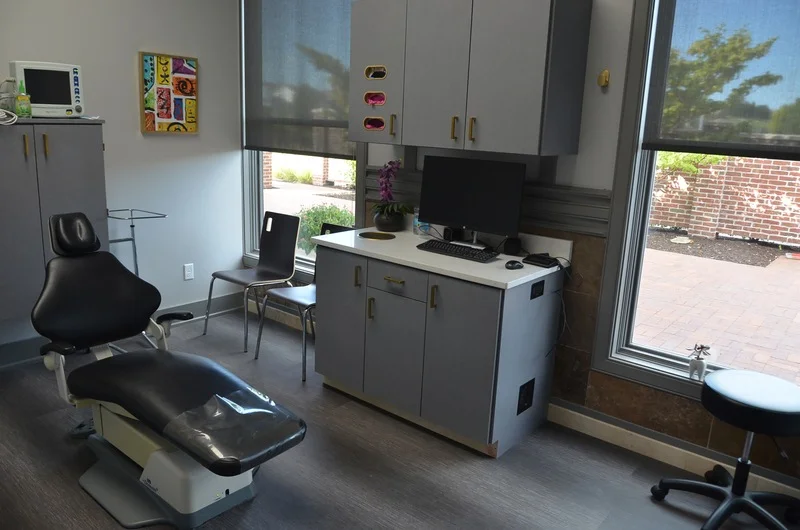
Treatment room used for implant planning at Village Pointe Oral Surgery

Why it matters

Why replace a missing tooth?

Missing teeth can affect chewing, speech, appearance, and the way the remaining teeth meet. Replacing a tooth can protect more than the visible gap.

01 / Preserve

Prevent bone loss

An implant transfers biting forces into the jaw, helping maintain bone in an area that would otherwise lose stimulation.

02 / Protect

Stop teeth from shifting

Filling the open space helps protect the alignment of nearby teeth and the way the upper and lower teeth meet.

03 / Function

Restore chewing power

A stable implant-supported tooth can make it easier to bite and chew with confidence.

04 / Renew

Look and feel natural

An implant supports a restoration designed to replace the missing tooth without altering healthy neighboring teeth.

What All-on-X means

One fixed set of teeth. Four implants.

All-on-X replaces all the teeth in an upper or lower arch with a full set of fixed teeth supported by four dental implants. The new teeth stay in place—you do not remove them like a regular denture.

Considering a full arch?

A fresh start when teeth are failing.

Visit the All-on-X page for the step-by-step treatment journey, the simple fee overview, and who this option may help.

Explore All-on-X full-arch implants

Implant technology, step by step

From a 3D scan to navigated placement.

The implant plan connects detailed imaging, restorative goals, and live surgical guidance. Each stage helps Dr. Shnayder understand the anatomy and carry the virtual plan into the procedure.

01 / Capture

3D CBCT scan

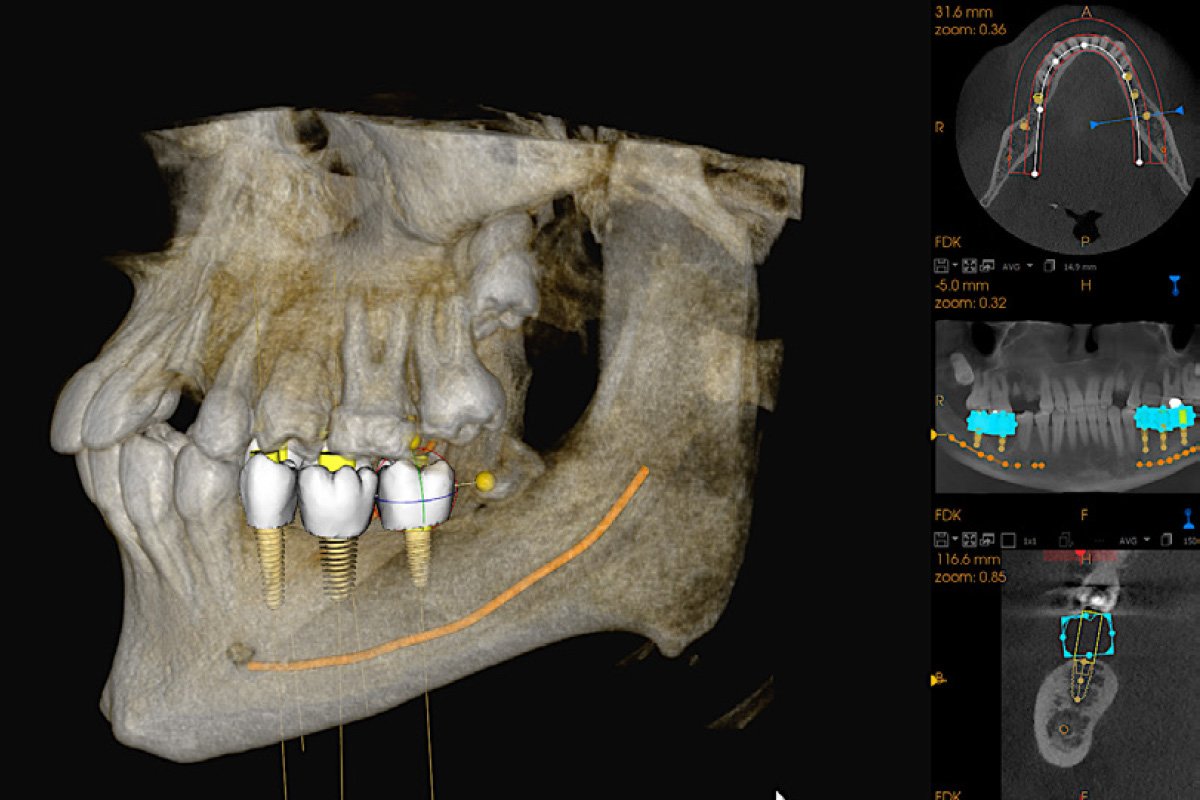
A cone-beam CT scan shows the available bone and the position of nearby teeth, sinuses, and nerve pathways in three dimensions.

02 / Plan

Virtual implant planning

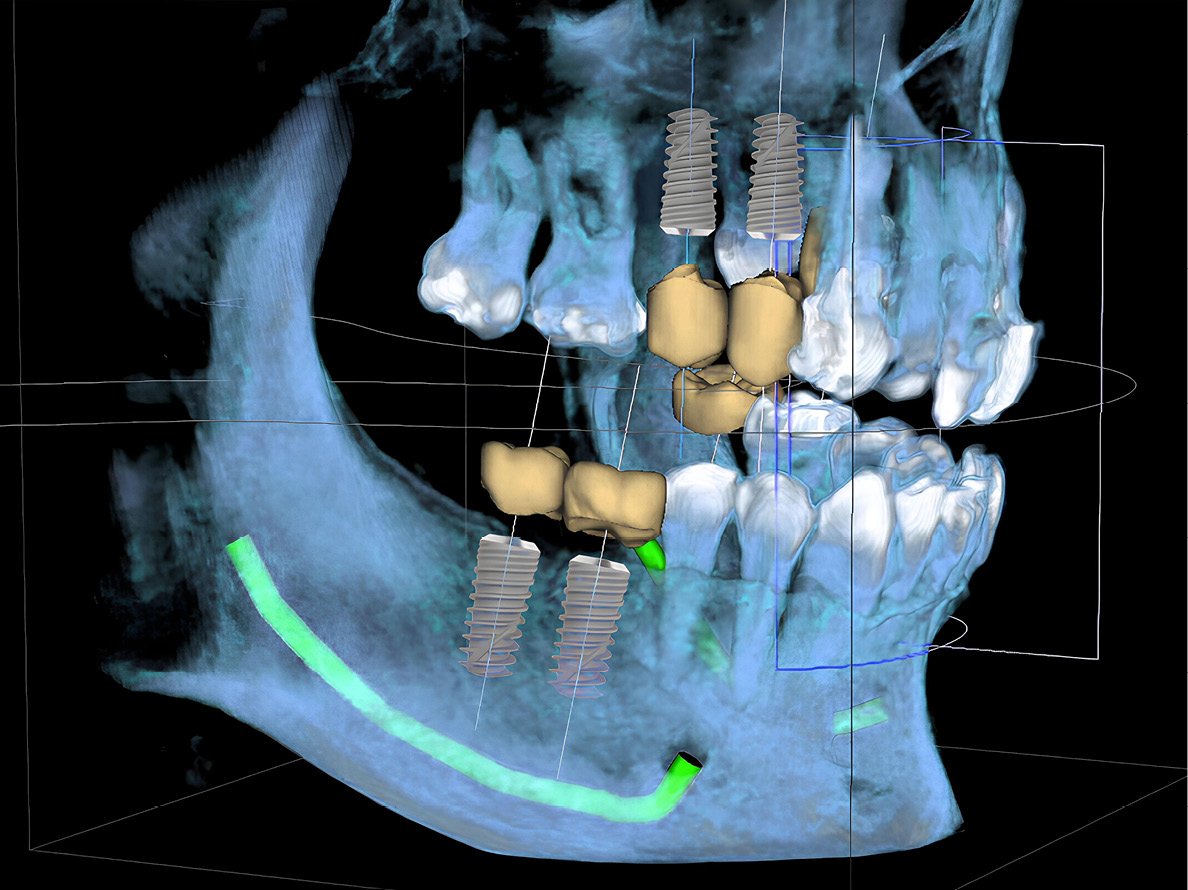
The scan is used to evaluate implant size, angle, depth, and position in relation to the future restoration and surrounding anatomy.

03 / Navigate

X-Guide placement

During surgery, X-Guide tracks the drill in real time against the 3D plan, displaying its position, angle, and depth as the implant site is prepared.

04 / Coordinate

Restorative handoff

The surgical position is coordinated with the restoring dentist so healing and the final crown, bridge, or denture can follow the same plan.

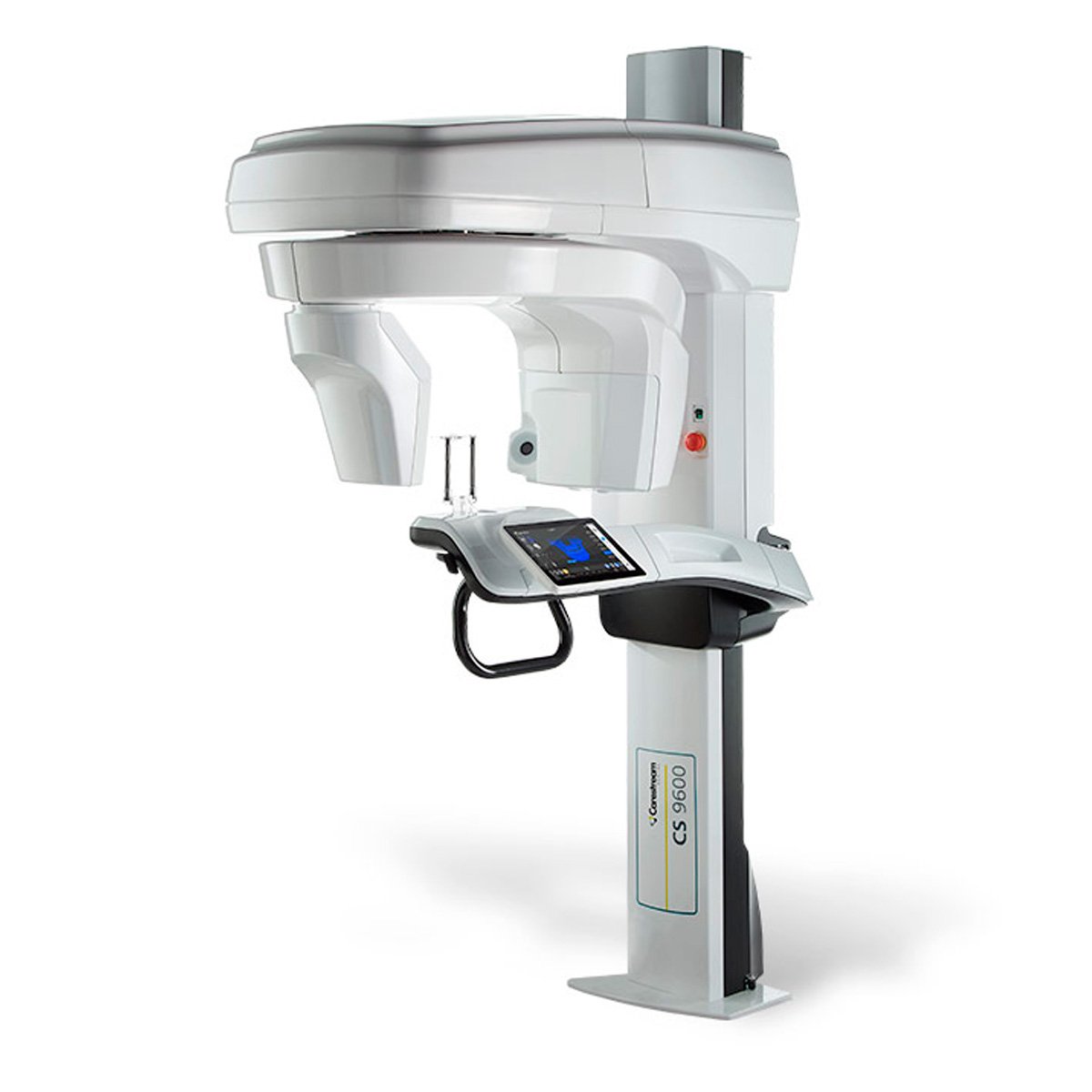
Carestream CS 9600 cone-beam CT scanner used for implant planning

See the anatomy in three dimensions

CBCT imaging guides the plan

The CS 9600 cone-beam CT scanner captures a focused three-dimensional view of the implant site. Unlike a flat X-ray, the scan lets the surgical team evaluate bone width and height, trace important anatomy, and plan the implant in relation to the intended tooth before treatment begins.

Real-time surgical guidance

X-Guide Dynamic 3D Navigation

X-Guide from X-Nav Technologies connects the virtual plan to the procedure. Similar to GPS, it tracks the handpiece and patient anatomy, then shows the planned path and live drill position on screen. Dr. Shnayder can see position, angle, and depth while preparing the site and placing the implant, without relying on the scan as a static reference alone.

See how dental implant treatment works

Your replacement options

A fixed bridge, removable partial, denture, or implant-supported restoration may be considered. Imaging and an examination help determine which option fits the available bone, health history, and restorative plan.

Titanium and zirconia implant options

Dr. Shnayder places both titanium and zirconia dental implants. The material choice is personalized to the patient, taking into account the treatment site, bone and gum anatomy, restorative plan, clinical needs, and patient preferences.

How implant treatment works

Dr. Shnayder places the selected implant in the planned position. Many modern implants use a single-stage approach and may be ready for restorative treatment after a healing period, depending on stability and bone quality.

Implant care is coordinated with the restoring dentist so the surgical and final tooth positions work together.

Bone and site preparation

An extraction and implant can sometimes be combined. When bone volume is limited, grafting may be recommended before or during implant placement to create adequate support. Learn more about bone grafting and site development.

Cherry patient financing

Treat Yourself Now. Pay Later.

Cash, Credit, or Cherry

  • 0% APR plans available
  • Apply in seconds
  • No hard credit check
  • Budget friendly

Payment estimator

Sample monthly payments

Treatment total6-month plan12-month plan18-month plan
$1,000$143/mo$77/mo$53/mo
$3,000$429/mo$231/mo$158/mo
$5,000$715/mo$385/mo$264/mo

Examples only. Exact terms and APR depend on credit score, eligibility, and other factors. Payment amounts shown are rounded to the nearest whole dollar.

Questions or next steps

Talk with the team.

Call the office for scheduling, procedure-specific guidance, or urgent postoperative concerns.

Call Now Request a Consultation

Village Pointe Oral Surgery

Call the office

Monday: 8:00 a.m.–5:00 p.m.
Tuesday: 8:00 a.m.–5:00 p.m.
Wednesday: 8:00 a.m.–5:00 p.m.
Thursday: 8:00 a.m.–5:00 p.m.
Friday: 7:00 a.m.–2:00 p.m.

402-317-5657
Open phone app

Village Pointe Oral Surgery

Email the front desk

Choose your email app, or copy the address and paste it into a new message.

frontdesk@vpoms.com
Open email app

Ask the team

How can we help?

Send us a general question and the front desk will get back to you during office hours.

Please keep it to general questions — if the team needs more detail, they will call you. For urgent postoperative concerns, please call the office directly at (402) 317-5657 rather than using this form.